Who's Riding Shotgun? How Your Road Trip Companion Can Make or Break the Whole Trip
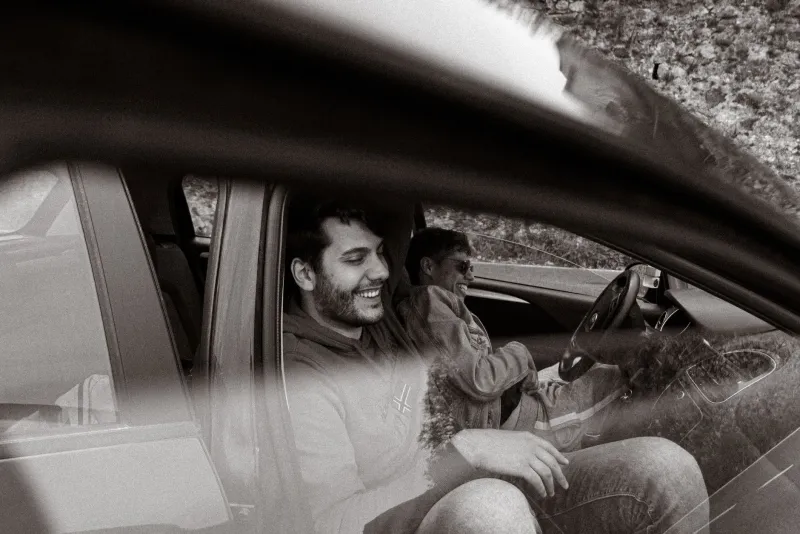
You've mapped the route. You've got the cooler stocked, the tank full, and a playlist that could soundtrack a movie. Everything's lined up. And then, somewhere around hour four on a flat stretch of I-40, you realize the person sitting next to you is driving you absolutely insane.
Not because they're a bad person. Not because anything went dramatically wrong. Just because the two of you, crammed into a moving vehicle for days on end with no real escape, are fundamentally incompatible travel partners.
It happens more often than people admit. And it can quietly ruin an otherwise great trip.
Here's the thing nobody says out loud before departure: your companion matters more than almost any other variable in the road trip equation. More than the car. More than the weather. Maybe even more than the destination itself.
The Myth of "We'll Figure It Out"
There's a romantic notion that road trips are fluid, spontaneous, go-with-the-flow experiences — and they absolutely can be. But that fluidity requires a certain alignment between the people in the car. When you don't have it, "we'll figure it out" becomes the most stressful phrase in the English language.
Different people have wildly different ideas about what a road trip should look like. Some want to push miles and cover ground. Others want to stop every forty-five minutes because they spotted a hand-painted sign for a roadside curiosity. Neither approach is wrong. But if you're one type paired with the other, you're going to spend a lot of time feeling frustrated, rushed, or bored — and resentment has a way of building quietly in a small space.
Before you ever invite someone to share your journey, it's worth having a real conversation about expectations. Not the enthusiastic "yes, let's do it!" conversation — the one that comes after, where you actually talk about what you each want the trip to feel like.
Personality Compatibility Goes Deeper Than You Think
You might know someone well in everyday life and discover you're completely mismatched on the road. That's because road tripping strips away the buffers we normally have. There's no going home at the end of the night. There's no separate space to decompress. It's just you, them, and a whole lot of windshield time.
Introverts and extroverts can absolutely travel together — but they need to acknowledge the difference upfront. An introvert who needs quiet time to recharge isn't being antisocial; they're managing their energy. An extrovert who wants to narrate every billboard isn't being annoying; they're engaging with the experience. The tension comes when neither person understands what the other actually needs.
Decision fatigue is another real factor. Some people find constant choices energizing. Others find them exhausting. If one person wants to crowdsource every meal and detour while the other just needs someone to make a call, you've got a recipe for low-grade friction that compounds over days.
And then there's the big one: conflict style. How does this person handle disagreement? Do they shut down or escalate? Can they laugh something off, or does every small frustration become a referendum on the entire trip? You might not know the answer until you're both hungry and running late in an unfamiliar town — which is not the ideal time to find out.
The Unspoken Contracts We Make
Every road trip partnership runs on a set of unspoken agreements. Who handles navigation? Who picks the music when the other person is driving? Who decides when to stop for gas, food, or a stretch? Who pays for what, and how?
These things sound trivial until they aren't. Money, in particular, has a way of surfacing tension that was already there. If one person is comfortable splurging on a nice motel and the other is counting every dollar, that imbalance will show up — and it'll show up at the worst possible moment, like when you're both exhausted and just need a place to sleep.
The best road trip companions talk about this stuff before they leave. Not in a rigid, contract-signing kind of way — just an honest, "hey, here's what I'm thinking and here's what I need" conversation. It takes maybe twenty minutes and can save the entire trip.
Green Flags to Look For
So what does a genuinely good road trip companion look like? A few qualities that tend to matter more than people expect:
Adaptability. Plans change on the road. Gas stations close, weather shifts, the "must-see" attraction turns out to be a sad parking lot. Someone who can pivot without spiraling is worth their weight in gold.
Comfortable with silence. Not every mile needs to be filled with conversation. A companion who can just exist in the car without manufacturing noise — or without making you feel guilty for going quiet — is a rare and beautiful thing.
Honest about their limits. The person who says "I'm getting tired, can we stop soon?" is infinitely easier to travel with than the one who white-knuckles it until they snap.
Genuinely curious. Road trips reward curiosity. Someone who wants to poke around the weird little diner, read the historical marker, or take the scenic detour "just to see" tends to make the whole experience richer.
When It's Not Working
Sometimes, despite your best efforts, the chemistry just isn't there. Maybe the trip has already started and you're two days in, realizing this isn't working. That's a hard spot to be in, but it's not hopeless.
Named it. Gently, directly, without blame. "Hey, I feel like we're not quite on the same page about the pace — can we talk about it?" is always better than letting the tension fester until someone says something they can't take back.
Build in solo time when you can. Even an hour where one person wanders a town on their own while the other reads in the car can reset the dynamic.
And if the trip is truly miserable for both of you, it's okay to cut it short. A story about the road trip that went sideways is still a story. You'll laugh about it eventually.
Choose Your Co-Pilot Like It Matters — Because It Does
The open road is one of the best things about living in a country this big and this varied. There's always another highway to chase, another stretch of nowhere that turns into somewhere, another horizon worth chasing. But the person you share that experience with shapes what it actually becomes.
Choose them thoughtfully. Talk before you go. Be honest about what you need. And when you find someone who matches your road trip energy — hold onto them, because that kind of travel chemistry is genuinely rare.
The right companion doesn't just make the miles go faster. They make the whole journey mean more.